


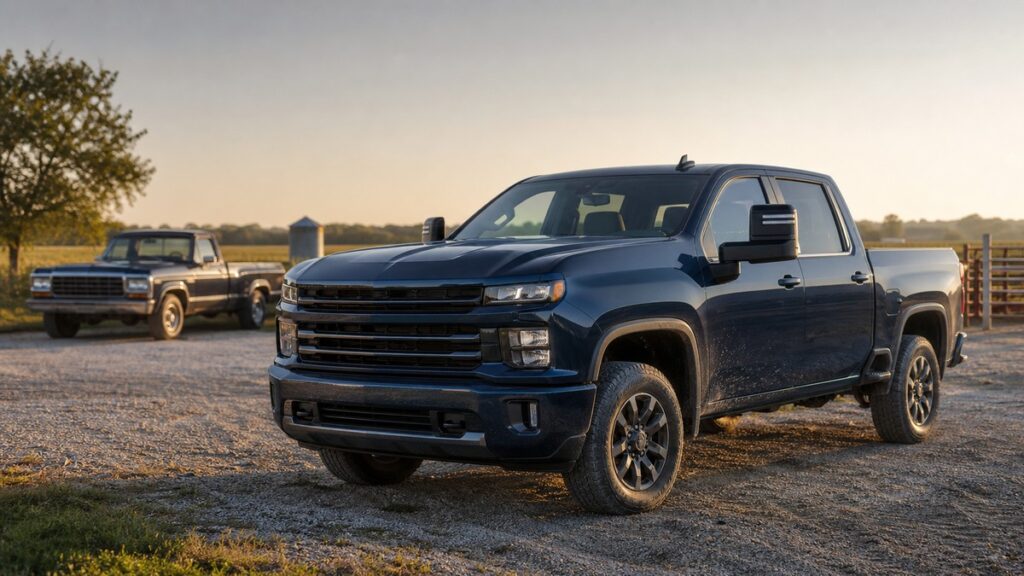
When General Motors revealed the next-generation 2027 Chevy Silverado 1500, the debut arrived with fresh styling, a reworked cabin, an updated powertrain lineup, and one confident marketing line that got truck fans talking. Chevrolet called itself the maker of the longest-lasting full-size pickup trucks on the road. It sounds impressive, but a claim like that deserves a closer look before anyone treats it as gospel.
- GM’s “longest-lasting” label leans on 39 model years of S&P Global Mobility registration and operation data from 1987 through 2025.
- The study measures how many trucks stay on the road, not how few problems they have along the way.
- Longevity and dependability sound similar, but they answer two very different questions for buyers.
Where the Claim Comes From
Dig into the fine print and the boast has a specific foundation. GM ties the “longest-lasting” language to 39 model years of S&P Global Mobility data, pulling from U.S. Vehicles in Operation figures and U.S. New Vehicle Registrations. The window covers every manufacturer building full-size pickups during the 1987 to 2025 stretch. So this isn’t a number Chevy pulled out of thin air. There’s real registration data sitting behind it.
The way the study works matters, though. Instead of judging trucks by repair shop visits or owner complaints, it calculates a manufacturer-level “Longevity Score.” That score reflects the average ratio of vehicles still in operation compared to how many were originally registered for each model year. In plain terms, it counts how many old Chevy trucks are still running around versus how many rolled off the line. A high survival rate earns a high score.
Longest-Lasting Is Not the Same as Most Dependable
Here’s the catch. The methodology skips over mileage, vehicle condition, maintenance history, and repair frequency. A truck can stay registered and technically on the road for 20 years even if its owner has poured money into it the whole time. Steady maintenance and a stack of receipts keep plenty of old pickups alive well past their prime.
That’s why the “longest-lasting” and “most dependable” labels shouldn’t be treated as twins. Dependability usually describes how consistently a vehicle runs without trouble. Longevity just tracks whether it’s still out there. A truck that survives decades thanks to constant repairs can score well on longevity while frustrating its owner on reliability. Both things can be true at once, which makes the marketing tidy and the reality a little messier.
What Independent Reliability Data Suggests
Outside of GM’s chosen study, the reliability picture gets more competitive. Recent head-to-head comparisons of the Ford F-150, Silverado 1500, and Ram 1500 have crowned different winners depending on the metric, and several reliability rankings have placed a handful of rival trucks ahead of the Silverado. Used-truck shoppers have also been warned to inspect certain Silverado engines closely, including a pair of 5.3-liter V8s and the 6.2-liter L87, before signing anything.
None of that erases the Silverado’s strengths. It hauls hard, tows well, and comes in enough cab and bed combinations to fit almost any buyer. Shoppers weighing a Colorado vs Silverado decision are usually choosing between mid-size maneuverability and full-size capability rather than questioning whether the truck will survive, and Chevy’s longevity story feeds that confidence either way. The point is simply that “longest-lasting” answers one narrow question, and a smart buyer should ask a few more.
Sales Momentum Behind the Boast
Chevy isn’t making this claim from a weak position. Between the Silverado and GMC Sierra, GM moved 236,136 full-size trucks in the second quarter of 2026 and 436,954 through the first half of the year. That output tops Ford’s 195,479 for the quarter and 352,960 for the half, though the F-Series still wears the single-nameplate sales crown because GM splits its volume across two brands. On its own, the Silverado accounted for 142,745 of those Q2 sales, with Ram at 110,166 and Toyota well back at 39,752.
How to Read the Fine Print Before You Buy
Marketing claims are built to sound airtight, and this one is no exception. GM’s longest-lasting line rests on legitimate registration data, so it’s fair to say Chevy trucks stick around. Just remember what the study actually counts. If long-term survival is your priority, the Silverado has a real argument. If you care more about avoiding trips to the shop, lean on independent reliability reviews, check the engine history on any used model, and treat “longest-lasting” as one useful data point rather than the whole story. Trucks are a big purchase, and the details reward a careful reader.
