
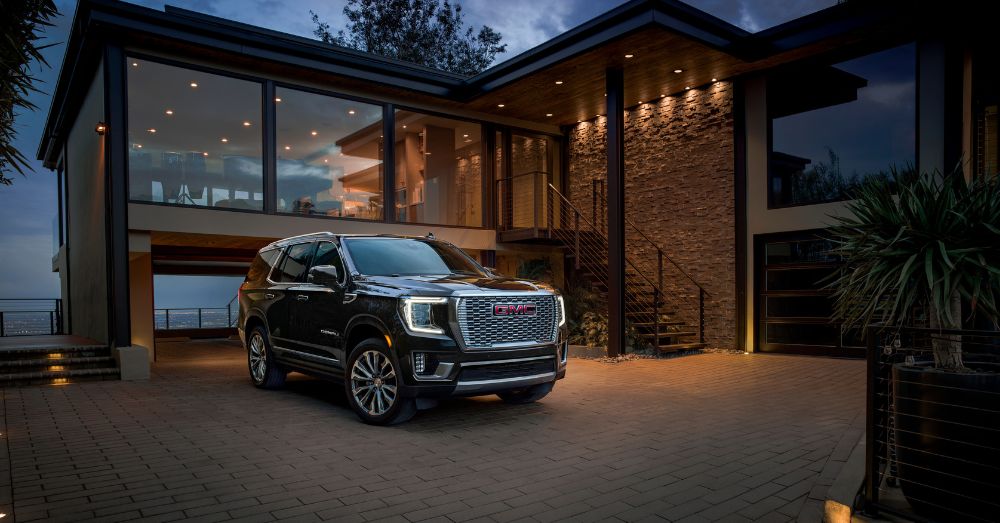
Shopping for a full-size SUV means you’re probably looking at the Ford Expedition and GMC Yukon. Both bring serious family-hauling capability, but they take different approaches to getting you and seven other people where you need to go. One leans on turbo power and towing muscle, while the other offers V8 choices and a diesel option. Your decision comes down to what matters most for your daily driving.
- The Ford Expedition costs less to start at $64,995 compared to the Yukon’s $66,900, giving you more SUV for your money right out of the gate.
- Ford’s EcoBoost V6 delivers 400 horsepower standard and can tow up to 9,600 pounds, beating the Yukon’s 8,400-pound max towing capacity.
- The GMC Yukon counters with three engine choices, including a fuel-sipping diesel that hits 27 mpg on the highway, plus more cargo space behind the third row.
Price and Value Comparison
Your wallet feels the difference before you even sit in the driver’s seat. The 2026 Ford Expedition starts around $64,995 for the base Active trim, while the GMC Yukon Elevation trim begins at $66,900. That gap isn’t huge, but Ford includes more standard tech like their 24-inch panoramic display and BlueCruise hands-free driving (with a trial period).
Moving up the trim ladder changes the math. The Expedition maxes out around $86,655 for a loaded King Ranch model. The Yukon climbs higher, with its Denali Ultimate hitting $103,295. GMC justifies the premium with 24-inch wheels, a 22-speaker Bose system, and massaging seats all around. Whether that’s worth the extra cash depends on how much luxury you need in a vehicle designed to haul hockey gear and groceries.
Power and Performance
Here’s where things get interesting. Ford puts all its chips on the 3.5-liter EcoBoost V6, making 400 horsepower and 480 lb-ft of torque in standard form. Want more? The Tremor and Platinum trims offer a high-output version pumping out 440 horses and 510 lb-ft. That turbo V6 pulls hard from any speed, and it handles highway merges like a much smaller vehicle.
GMC takes the traditional route with V8 engines. The base 5.3-liter makes 355 horsepower, which feels adequate but not exciting. Step up to the 6.2-liter V8 in Denali trims and you get 420 horsepower. The real surprise? The optional 3.0-liter Duramax diesel cranks out 305 horsepower and 495 lb-ft of torque while returning up to 27 mpg on the highway. For 2026, this diesel is available across all Yukon trim levels. For long road trips, that diesel turns the Yukon into a completely different vehicle.
Towing capacity tilts toward Ford. The 2026 Expedition hauls up to 9,600 pounds when properly equipped, compared to the Yukon’s 8,400-pound maximum. If you’re pulling a large camper or boat every weekend, that 1,200-pound difference matters.
Interior Space and Cargo
Both SUVs seat up to eight people, but they divide up that space differently. The 2026 Yukon offers 25.5 cubic feet behind the third row compared to the Expedition’s 22.9 cubic feet. That extra cargo room makes a real difference when you’re packing for family trips. Behind the second row, the Yukon still leads with 72.6 cubic feet versus the Expedition’s 69.9 cubic feet.
The extended-length models flip the script slightly. The Expedition Max provides 36 cubic feet behind the third row (based on recent testing showing it holds more actual luggage despite lower official specs), while the Yukon XL delivers 41.5 cubic feet. Either way, you’re getting enough space for Costco runs and vacation luggage without folding seats.
Passenger comfort feels similar in both vehicles. Second-row legroom measures about 42 inches in the Yukon and 41.5 inches in the Expedition. You won’t hear complaints from anyone riding in back, even on multi-hour drives.
Technology and Features
Ford redesigned the Expedition’s interior for 2025, and those updates carry into 2026. The new 24-inch panoramic display combines gauge cluster and infotainment functions, controlled by a separate 13.2-inch touchscreen. It runs Google-based software with Google Maps and Google Assistant built in. The learning curve is minimal if you’ve used an Android phone.
GMC refreshed the Yukon with a 16.8-inch vertical touchscreen that dominates the dashboard. It looks modern and responds quickly to inputs. Super Cruise, GM’s hands-free driving system, works on about 750,000 miles of mapped roads. That includes towing situations, which Ford’s BlueCruise also handles. Both systems work well, so this comes down to personal preference.
Safety tech is generous on both. Automatic emergency braking, blind-spot monitoring, and lane-keeping assist come standard. The Yukon adds GM’s Night Vision system on higher trims, displaying thermal images of what’s ahead in the dark. Ford counters with a 360-degree camera system and trailer-specific features.
Fuel Economy Reality Check
Neither SUV will win green awards. The 2026 Expedition returns 16 mpg city and 24 mpg highway with rear-wheel drive, or 15/22 mpg with four-wheel drive. The Yukon with the 5.3-liter V8 gets 16/20 mpg (15/19 with 4WD). The bigger 6.2-liter V8 drops to 14/18 mpg.
That diesel Yukon option changes everything, though. Its 21/27 mpg rating means you’ll stop for gas far less often on road trips. Over 15,000 miles yearly, the diesel saves you about 150 gallons compared to the base gas engines. At today’s fuel prices, that’s real money back in your pocket.
Making Your Choice
The 2026 Ford Expedition makes sense if you want maximum towing capability, lower entry pricing, and that smooth EcoBoost power delivery. You get a more modern interior design and slightly better fuel economy than the base Yukon. The redesigned cabin feels upscale even in lower trims.
Choose the 2026 GMC Yukon when you need more cargo space, prefer V8 engine choices, or want that diesel fuel economy available across all trims. The Denali trims offer more luxury features, though you’ll pay for them. Super Cruise with towing capability gives GMC an edge for long highway drives with trailers attached.
Both SUVs handle the core mission of moving families and gear with confidence. You won’t make a wrong choice here. The Expedition saves you money upfront and delivers more towing muscle. The Yukon provides more cargo room and engine variety. Test drive both and see which one feels right for your driveway.
This article might include affiliate links, which means we may receive a commission if you make a purchase using these links, without any additional cost to you. We have thoroughly researched and tested all products featured to provide a trustworthy review.
 Stacy Wilson